|
 |
 |
 |
This text, the Tsa-pao-tsang-ching, is dated Yen-hsing 2 (A.D. 472); it contains 121 parables or stories (Skt. avadana). It was compiled in China, near the Northern Wei capital of P'ing-ch'eng. Based on Indian materials, the text was compiled and composed by the chief monk T'an-yao and translated by Kikkaya (Chi Chia-yeh) and Liu Hsiao-piao. There is no Indian original of the complete text, but many stories have parallels in Sanskrit or Pali. A Sanskrit translation of the Chinese title would be Ksudraka (tsa) pitaka (pao-tsang). Minor texts, such as avadanas, jatakas (birth stories), and so on, may be included in a fifth agama, the Ksudrakagama or Ksudrakapitaka. This seems to have been the case in the canon of the Dharmagupta school. The Sarvastivada school had a fourth pitaka called the Ksudrakapitaka. Its contents may have been the Buddha's teaching in twelve divisions, containing such divisions as avadana, jataka, gatha, and so on. Both schools had equally popular vinayas (monastic rules) in China in the fifth century. The content of our text resembles the content of a Ksudrakapitaka. It is certainly not a complete Ksudrakapitaka, but it bears all the marks of a text in a Ksudrakapitaka.
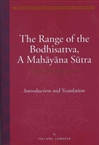
Storehouse of Sundry Valuables, Numata Center, Hardcover, 275 pp., $35.00
|
|
 |
 |
 |
 |

|